

Dental Crowns in Hackensack: When and Why You May Need One
July 1, 2026A dental crown is a restoration crafted to cover the entire visible surface of a tooth above the gum line, restoring both function and aesthetics. A damaged tooth does not always need to be removed. In many situations, a dental crown can strengthen the tooth, restore function, and improve appearance while preserving the natural tooth underneath. Whether a tooth has been weakened by decay, cracked after an injury, or affected by a large filling, a crown can stabilize the remaining tooth and support comfortable chewing.
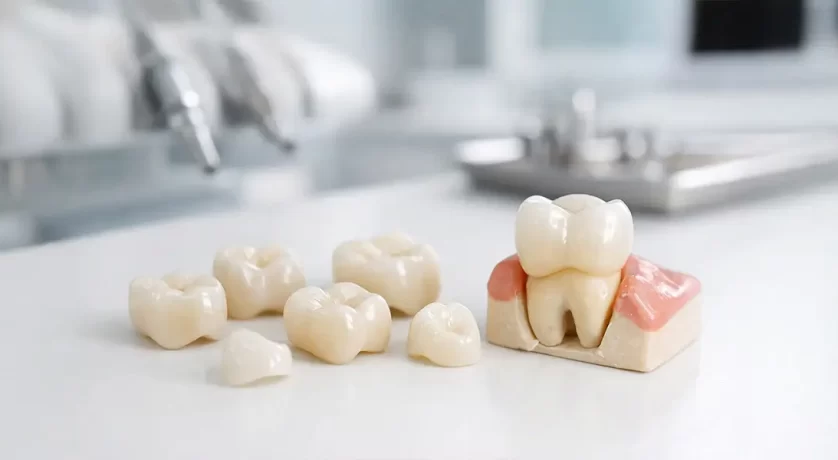
Patients considering dental crowns in Hackensack often want to know whether a crown can address both structural and cosmetic concerns. In addition to repairing damaged teeth, crowns are commonly used after root canal treatment to replace failing restorations and to improve the appearance of teeth with significant cosmetic concerns.
Knowing why a crown may be recommended can help you evaluate your treatment options and feel more prepared for the treatment process.
What Is a Dental Crown?
When a tooth can no longer function predictably because of damage or wear, a crown can provide full coverage to restore its strength, form, and appearance.
For this reason, crowns are often recommended when significant portions of a tooth have been lost and additional support is needed.
Modern crowns can be fabricated from materials such as porcelain, ceramic, zirconia, metal alloys, or combinations of these materials. The most appropriate choice depends on the tooth’s location, chewing demands, aesthetic goals, and overall oral health.
Some patients refer to crowns as caps because they fit over the visible portion of a tooth. In many situations, a dental cap tooth repair approach may be recommended when a tooth needs additional support after extensive decay or structural damage.
When Do You Need a Dental Crown?
Crowns are generally recommended when a tooth cannot be predictably restored with a filling alone.
Large Filling Replacement Crown
Teeth restored with large fillings may become more vulnerable to cracking because less natural tooth structure remains to absorb everyday chewing forces.
When an older filling begins to fail, or when too little healthy tooth structure remains, a crown may offer a more durable solution than placing another large filling.
Fractured Tooth Restoration
A cracked or fractured tooth may not always cause immediate symptoms. However, cracks can worsen over time as chewing forces place additional stress on the tooth.
As part of a fractured tooth restoration plan, a crown may be used to hold the tooth together and reduce stress on weakened areas. Prompt treatment can improve the chances of preserving the tooth before the fracture extends further.
Following Root Canal Treatment
After root canal therapy, teeth often become more susceptible to fracture because the inner pulp tissue has been removed. A crown is frequently recommended to help the tooth withstand normal biting forces after treatment.
Severe Tooth Wear
Chronic grinding, acid erosion, and years of wear can gradually reduce tooth structure. In these situations, crowns may be used to rebuild worn teeth and restore proper chewing function.
Cosmetic Concerns
Although crowns are often used for restorative purposes, they may also improve the appearance of teeth affected by severe discoloration, developmental defects, or significant shape irregularities when other cosmetic treatments are not appropriate.
Why Would a Crown Be Recommended Instead of a Filling?
One of the most common questions patients ask is why a dentist would recommend a crown instead of a filling.
The recommendation usually depends on how much healthy tooth structure remains. Fillings work well when sufficient tooth structure is available to support the restoration. However, when a tooth has been extensively affected by decay, fractures, or previous dental work, a filling may not provide enough strength for long-term function.
In many cases, the decision is based on the amount of healthy tooth structure remaining after decay or damage is removed. Preservation of natural tooth structure remains a central focus in restorative dentistry, helping maintain the tooth’s strength and integrity.
The full-coverage design of a crown helps distribute functional forces throughout the tooth, thereby improving stability and durability. This approach places less stress on weakened areas and may reduce the likelihood of additional cracking over time.
Dental Crown Restoration and Long-Term Function
A successful dental crown restoration serves both functional and structural purposes. It helps restore comfortable chewing, supports normal speech, and contributes to a stable bite.
Crowns are custom-designed to match the contours of surrounding teeth. Proper fit is important because even small changes in tooth shape can affect how the teeth come together during everyday function.
Porcelain Crown Aesthetics and Cosmetic Options
Modern restorative materials have significantly improved the appearance of dental crowns. Many patients choose all-ceramic or porcelain restorations because they closely resemble natural enamel.
Today’s crown materials can be customized to match the shade, translucency, and surface texture of nearby teeth, helping front-tooth crowns look natural.
Patients who wish to improve both function and appearance may benefit from discussing cosmetic dental crown options with their dentist. Material selection depends on several factors, including bite forces, tooth location, and cosmetic goals.
The Benefits of Porcelain Crowns
For many patients, porcelain crown aesthetics offer an excellent balance between appearance and durability. The natural translucency and light-reflecting qualities of porcelain and ceramic make them well suited for highly visible areas of the smile.
Your dentist can determine whether porcelain, zirconia, or another restorative material is most appropriate based on your individual clinical needs.
What Happens During Dental Crown Treatment?
Most dental crowns are fabricated over two appointments; however, same-day crown options are available at some offices for select cases.
Before recommending a crown, your dentist will assess the condition of the tooth, review diagnostic images as needed, and determine whether it can be successfully restored. In some situations, alternative treatment options may also be discussed.
The crown process typically begins with the removal of decay and weakened tooth material, followed by careful shaping of the tooth. After precise scans or impressions are taken, a temporary crown is placed to maintain function and protect the tooth until the final restoration is completed.
At the second visit, the permanent crown is evaluated for fit, appearance, and bite alignment before being securely bonded into place.
During a consultation, your dentist can explain material options, treatment timelines, and the expected lifespan of different crown types. Patients exploring dental crown treatment options in Hackensack should feel comfortable asking questions about the procedure and long-term maintenance.
How Long Do Dental Crowns Last?
While many crowns remain functional for 10 to 15 years or longer, longevity depends on several factors, including oral hygiene habits, bite forces, crown material, and routine dental care.
Regular examinations allow dentists to monitor the condition of the crown and identify potential concerns before they become more significant.
Reducing stress on a crown by avoiding hard objects and seeking treatment for teeth grinding may help maintain its condition over time.
Signs a Crown May Need Replacement
Although crowns are durable, they do not last forever. Over time, wear, changes in the underlying tooth, or damage to the restoration may require replacement.
Signs that a crown should be evaluated include:
- Persistent sensitivity
- Visible cracks or chips
- Decay around the edge of the crown
- Changes in bite comfort
- A loose or shifting restoration
Prompt evaluation can help prevent additional complications and preserve the underlying tooth.
Protecting Your Oral Health with Timely Treatment
A damaged tooth does not always cause immediate discomfort. However, delaying treatment may allow cracks to deepen, decay to progress, or structural problems to worsen.
Crowns are commonly used to rebuild compromised teeth, replace worn restorations, and support teeth that have undergone root canal therapy. When recommended appropriately, they can help preserve natural teeth and restore reliable function.
If you are exploring options for tooth repair in Hackensack, NJ, the team at Hackensack Dentist can evaluate your tooth and explain whether a dental crown is appropriate. The team at Hackensack Dentist can evaluate your oral health and recommend treatment based on your specific needs.
Frequently Asked Questions
Teeth affected by significant damage, advanced decay, excessive wear, or root canal treatment may benefit from the additional protection and support that a dental crown provides.
A crown may be recommended when a tooth has lost too much structure to be predictably restored with a filling alone. Crowns provide greater coverage and support for weakened teeth.
Local anesthesia is used to minimize discomfort. Although mild sensitivity may occur as the tooth adjusts, pronounced pain is not usually expected.
Crowns are designed for long-term durability and often last 10 to 15 years or longer when supported by good oral hygiene, proper bite function, high-quality materials, and routine dental visits.
Traditional crowns usually require two appointments scheduled a few weeks apart. Some practices may offer same-day crowns using digital technology.
Signs that a dental crown may need attention include persistent sensitivity, visible deterioration, decay surrounding the crown, discomfort during chewing, or a crown that no longer feels secure.